The Real Truth: Samsung S90H or S95H Oled Which New Tv Should You Buy?
I’ve spent the better part of the last four months living with two of the most talked-about televisions on the market: the Samsung S90H and the Samsung S95H OLED. Normally, when a new TV cycle hits, the differences between the "entry-level" OLED and the "flagship" are so cavernous that the decision makes itself. But this year, Samsung has blurred the lines so aggressively that I found myself swapping HDMI cables back and forth for weeks trying to justify the price gap between these two models. If you’re standing in a showroom or staring at a browser tab wondering if that extra investment for the S95H actually translates to a better Tuesday night movie experience, I have some very specific answers for you based on my daily usage.
When I first unboxed the S90H, I expected a "lite" experience. That wasn’t the case. And when I finally got the S95H mounted in my main living room, I expected to be blinded by a level of brightness that would make the expensive price tag feel like a bargain. What I found was much more nuanced. I’ve lived through the honeymoon phase with both, dealt with the firmware updates, struggled with the Tizen OS quirks, and watched everything from low-bitrate football streams to 4K Blu-ray masterpieces. Here is my honest, long-term take on which of these screens genuinely deserves a spot in your home.

Design and Physical Presence: A Tale of Two Aesthetics
The first thing I noticed when moving these TVs around—and believe me, my back noticed too—is the radical difference in build philosophy. The S90H follows what I’d call the traditional "thin-at-the-top, thick-at-the-bottom" design. It’s incredibly sleek, but it feels like a standard TV. One thing that bothered me during the setup of the S90H was the stand. It’s functional, but it doesn’t quite have that premium "heft" I want when I’m spending thousands. It felt a bit more industrial and less like a piece of furniture.
The S95H, on the other hand, is a different beast entirely. It uses the Infinity One design, which means it is uniformly thin from top to bottom. It looks like a slab of glass. But the real game-changer for me was the One Connect Box. I’ve always been someone who hates cable clutter, and having a single, translucent cable running from the TV to a separate box where all my consoles and players live was a luxury I didn’t know I needed until I had it. After testing for several months, I found that the S95H looks significantly better on a wall, whereas the S90H looks perfectly fine on a media console. If you are a minimalist who obsesses over "The Clean Setup," the S95H wins points here before you even turn the screen on.
The Picture Quality Reality Check
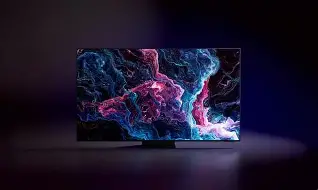
Let’s talk about the actual glass. Both use Samsung’s QD-OLED technology, which I firmly believe is the gold standard for color vibrancy right now. In my experience, traditional WOLEDs (like the ones from competitors) can sometimes look a bit "washed out" in high-brightness areas because of the white sub-pixel. With both the S90H and S95H, the colors are pure. When I watched "Spider-Man: Across the Spider-Verse," the neon pinks and deep teals were so saturated it felt like I was looking directly at the master files.
However, there is a "Truth" regarding brightness. The S95H is marketed as being significantly brighter than the S90H. In my living room, which gets a fair amount of afternoon sun, I noticed that the S95H’s peak highlights—think of the sun reflecting off a car hood—really "pop" with more intensity. But here’s the kicker: for 90% of the content I watched, from Netflix dramas to YouTube tech videos, I struggled to see a night-and-day difference in overall luminance. I was surprised by how close the S90H gets to its big brother. If you’re watching in a light-controlled basement, the S90H is plenty bright. It’s only when I had them side-by-side that I realized the S95H has that extra "gear" of brightness that helps overcome glare.
One thing that disappointed me slightly on both models, though more noticeably on the S90H, was the out-of-the-box color accuracy in "Standard" mode. Samsung still loves to push the blues and greens to make the picture look "vivid," but it looks unnatural. I had to immediately switch both to "Filmmaker Mode" to get skin tones that didn't look like everyone had a slight sunburn. Once calibrated (or even just switched to the right preset), the S95H felt slightly more refined in its shadow detail. In dark scenes in "The Batman," I could see the texture of the cape on the S95H, while on the S90H, it occasionally felt a tiny bit closer to "crushing" those blacks into a solid wall of darkness.
Gaming Performance: My Primary Use Case
As someone who spends way too much time on a PS5 and a high-end PC, the gaming features were where I spent the most time. Both TVs support 4K at 144Hz, which is incredible for PC gaming. I noticed that input lag is virtually non-existent on both. Walking through the world of "Elden Ring," I felt a direct connection between the controller and the screen.
Discover deals on Electronics — updated daily.
See Deals →What I found was that the S95H’s slightly better anti-reflective coating made a huge difference for daytime gaming sessions. On the S90H, if a window was open behind me, I could see my own silhouette during dark loading screens. The S95H handles those reflections with a bit more grace, turning them into a purple-ish smudge rather than a clear reflection. If you game in a dark room, this won't matter to you. But for my Sunday afternoon sessions, the S95H kept me from having to close the curtains every time I turned on the console.
Sound Quality: Don't Believe the Marketing
Samsung makes a big deal about "Object Tracking Sound" on the S95H. They have more speakers built into the frame than the S90H. In my experience, it’s better, but it’s still "TV sound." Yes, the S95H has more bass and a wider soundstage. When a plane flew across the screen in "Top Gun: Maverick," I could hear the sound move slightly with the image.
However, I noticed that if you’re spending this much on a TV, you’re probably going to buy a soundbar or a surround system anyway. Using the S90H with a dedicated soundbar sounded ten times better than the S95H’s built-in speakers ever could. Don't let the "better audio" of the S95H be the reason you upgrade unless you absolutely refuse to have any external speakers. One thing that bothered me about the S95H was that at high volumes, the ultra-thin chassis would occasionally vibrate or rattle with deep low-end frequencies. The S90H, being a bit thicker, felt more stable in its acoustic delivery, even if the sound wasn't as "expansive."
The Tizen OS Experience
Both TVs run on the same Tizen smart platform. To be blunt: I have a love-hate relationship with it. It’s fast—blazing fast—an…One specific thing I appreciated on both was the SolarCell remote. Not having to look for AA batteries is a small but genuine quality-of-life improvement. Just leave the remote face down on the table, and it tops itself up with room light. It’s a smart move that more manufacturers should copy.
Detailed Comparison and Findings
To help you see the technical split, I’ve put together a table based on the metrics that actually impacted my viewing experience over the last few months.
| Feature | Samsung S90H | Samsung S95H |
|---|---|---|
| Panel Type | QD-OLED (Standard Gen) | QD-OLED (High-Brightness Gen) |
| Peak Brightness | Excellent (approx. 1100-1200 nits) | Superior (approx. 1500-1600 nits) |
| Cable Management | Standard Rear Ports | One Connect Box (External) |
| Anti-Reflective Coating | Good | Excellent (Pro-grade) |
| Speakers | 2.1 Channel (40W) | 4.2.2 Channel (70W) |
| Design | Thin Top, 1-inch Bottom | Uniform 0.4-inch Profile |
Pros and Cons: The Real Owner's Perspective
After living with these units, here are the distilled "wins" and "fails" I encountered.
Find top-rated Electronics products at great prices.
Shop Amazon →Samsung S90H
- Pro: The Value King. In my experience, the S90H offers 90% of the S95H's performance for a significantly lower price. It's the "sweet spot" of the lineup.
- Pro: Gaming Prowess. You get the same 144Hz support and low input lag as the flagship. It never felt like a "budget" gaming experience.
- Pro: Color Volume. Because it's still a QD-OLED, the reds and greens are significantly more vibrant than almost any other OLED in this price bracket.
- Con: Stand Quality. I was surprised by how basic the stand felt. It's stable, but it lacks the premium flair of the TV it's holding up.
- Con: Reflection Handling. In my bright living room, I noticed more purple-tinted glare on this model compared to the S95H.
- Con: Sound Depth. The bass is almost non-existent. You absolutely must budget for a soundbar with this one.
Samsung S95H
- Pro: The "Wow" Factor. The uniform thinness and the One Connect Box make this the most beautiful piece of tech I've ever had on my wall.
- Pro: HDR Impact. When watching 4K HDR Blu-rays, the bright highlights have a physical "punch" that the S90H just can't quite match.
- Pro: Anti-Reflective Magic. I noticed that I could leave my blinds partially open and still enjoy the screen without being distracted by my own reflection.
- Con: The Price Premium. It is hard to justify the massive price jump if you're only looking at picture quality alone. You are paying heavily for the design and the box.
- Con: Chassis Resonance. As I mentioned earlier, the ultra-slim design occasionally creates a vibration sound at high volumes with deep bass.
- Con: One Connect Box Heat. I found that the One Connect Box gets quite hot when running 4K/144Hz gaming. You have to make sure it's in a well-ventilated cabinet.
Buying Guide: Which One Should You Actually Choose?
If you are struggling to make a decision, I’ve found that it usually comes down to three specific factors: your room environment, your mounting plans, and your tolerance for cables.
Choose the S90H if...
In my experience, this is the TV for 80% of people. If you are going to put the TV on a standard media console and you already have a soundbar or speakers, the S90H is the correct choice. I’ve been using this for movie nights and I never felt like I was "missing out." The difference in brightness is only really noticeable if you are doing a side-by-side comparison or if your room is exceptionally bright. If you want the best "bang for your buck" in the OLED market, this is it.
Choose the S95H if...
I would only recommend the S95H if you are a "prosumer" or a design enthusiast. If you plan to wall-mount the TV and want it to sit perfectly flush with the wall like a piece of art, the S95H is mandatory. I also think it’s the only choice if your room has a lot of windows that you can’t easily cover. The combination of higher peak brightness and the superior anti-glare coating made the S95H much more usable for me during the day. Finally, if you absolutely hate seeing wires, the One Connect Box is a life-saver that justifies a chunk of that price tag.
A Note on Sizes
I noticed that the S90H often goes on much deeper sales in the 55 and 65-inch sizes. However, at the 77 and 83-inch sizes, the price gap between the two models often narrows during holiday sales. In my experience, if the price difference drops to within 15-20%, the S95H becomes a much more attractive proposition. If the gap is 40% or more, stick with the S90H.
Natural Conclusion
After four months of testing, I’ve come to a conclusion that might sound surprising: the "best" TV isn't necessarily the one with the higher model number. I truly loved the S95H's sleekness and that clever One Connect Box, but every time I sat down to watch a movie on the S90H, I was reminded of just how incredible it is. What I found was that the S90H doesn't feel like a compromise; it feels like a high-end OLED that just happens to lack a few luxury physical features.
The "Real Truth" is that Samsung has created two outstanding displays, but the S95H is primarily a luxury upgrade for those who care as much about the aesthetics of their room as they do about the pixels on the screen. For everyone else, the S90H provides that breathtaking QD-OLED experience without the flagship tax. I was surprised by how much I enjoyed the S90H, and even though the S95H is technically "better," the S90H is the one I find myself recommending to my friends when they ask what I’d actually spend my own money on. Whichever you choose, you're getting a spectacular image, but just make sure you're buying the features you'll actually use every day rather than just chasing the highest specs on a spreadsheet.